
The question it answers: can many people grow one model, and can I check their claims?
Commons is built around seed lines. The first is stories260K: 260,000 numbers, trains on a CPU in seconds. Anyone can train a branch on their own text, with a replayable trace of the training, and anyone can combine branches with a recipe.
Recipes pinned by hash
A recipe names its ingredients by hash, not by address, and uses a canonical method: average, weighted, trimmed mean, TIES, DARE-TIES or layer graft. Every method is deterministic, so a recipe gives the same bytes on any machine, and the recipe records the hash of the result it expects. Recipes can be imported from Hugging Face, GitHub, any https link or a file. Before building, Commons checks every ingredient; then it builds, recovers a lost branch, or builds without it. Output can be exported to GGUF for the other views.
A verifier anyone can run
The verifier ships in the repository. It walks a recipe's lineage and marks every claim as proof, evidence or claim. Signing is optional and private by default, with your own keys.
Find models that merge
For larger models, Commons lists public fine-tunes of a base with the same shape, and screens them by distance from the base: a light fine-tune sits at 0.0004 to 0.04 across 20 public models, while a look-alike such as Qwen2.5-Coder-0.5B-Instruct is 0.56 from Qwen2.5-0.5B. The screen also shows which parent a model was really trained from, and it caught a NaN-weight upload.
What it showed
Merging public fine-tunes is popular; whether it helps is rarely measured. Two specialists (addition 80.5%, word reversal 100%) merged into one model that does both, but addition fell to 49.5% (95% interval 42.6 to 56.4), below the specialist and below joint training at 86%. Qwen Instruct plus Coder broke, and the distance screen predicted it. Merging still offers one model instead of several and a way to combine models whose training data nobody has; it is not, so far, a way to get better quality.
SEE IT USED
Case studies that use Commons
Each one is a published study you can repeat in the Inspector, then change to your own question.
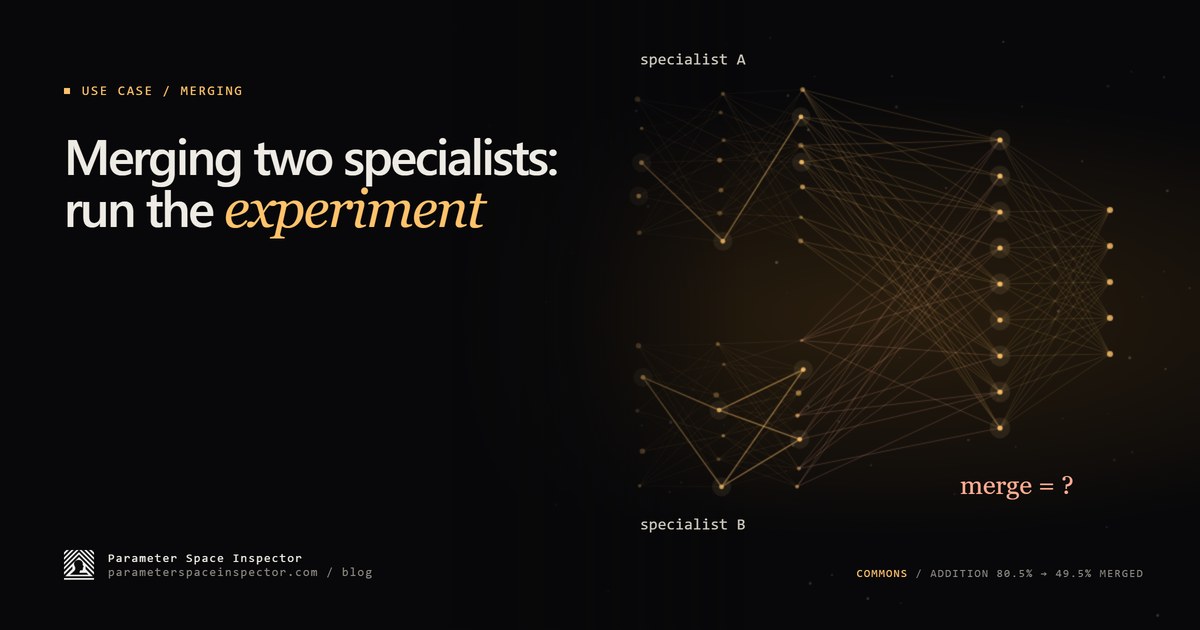 Walkthrough videoMerging two specialists: run the experimentscreened the parents, merged two specialists by a hash-pinned recipe and tested it: addition fell to 49.5%, below joint training at 86%
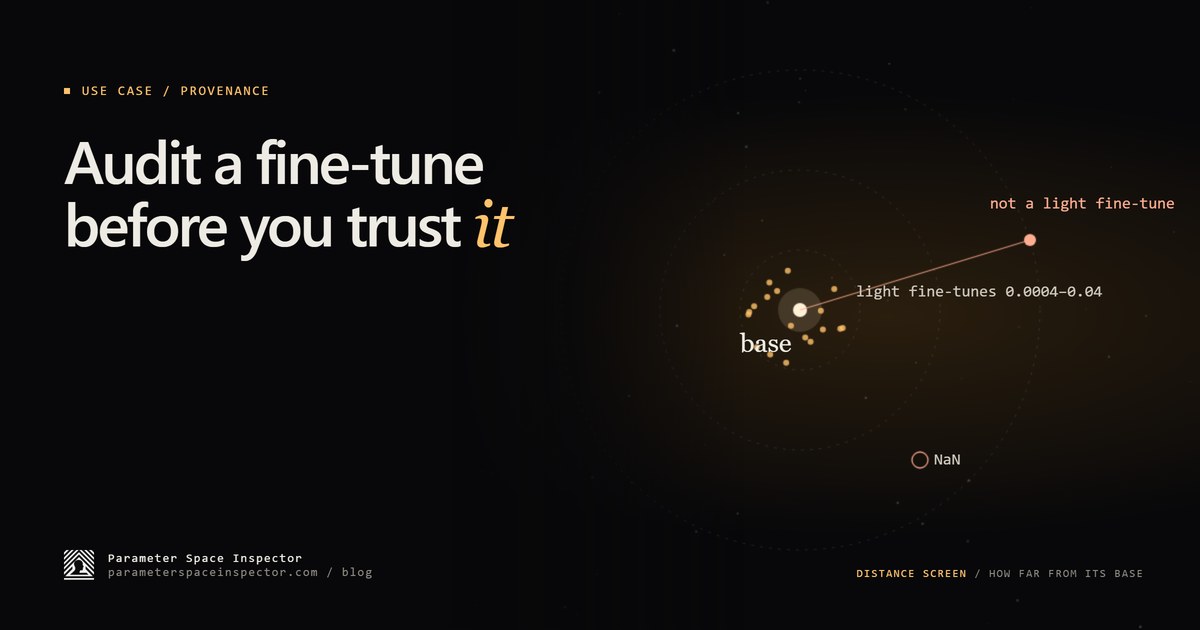 Walkthrough videoAudit a fine-tune before you trust itruns the distance screen on a candidate fine-tune: light fine-tunes sit 0.0004 to 0.04 from their base, Qwen2.5-Coder-0.5B-Instruct at 0.56
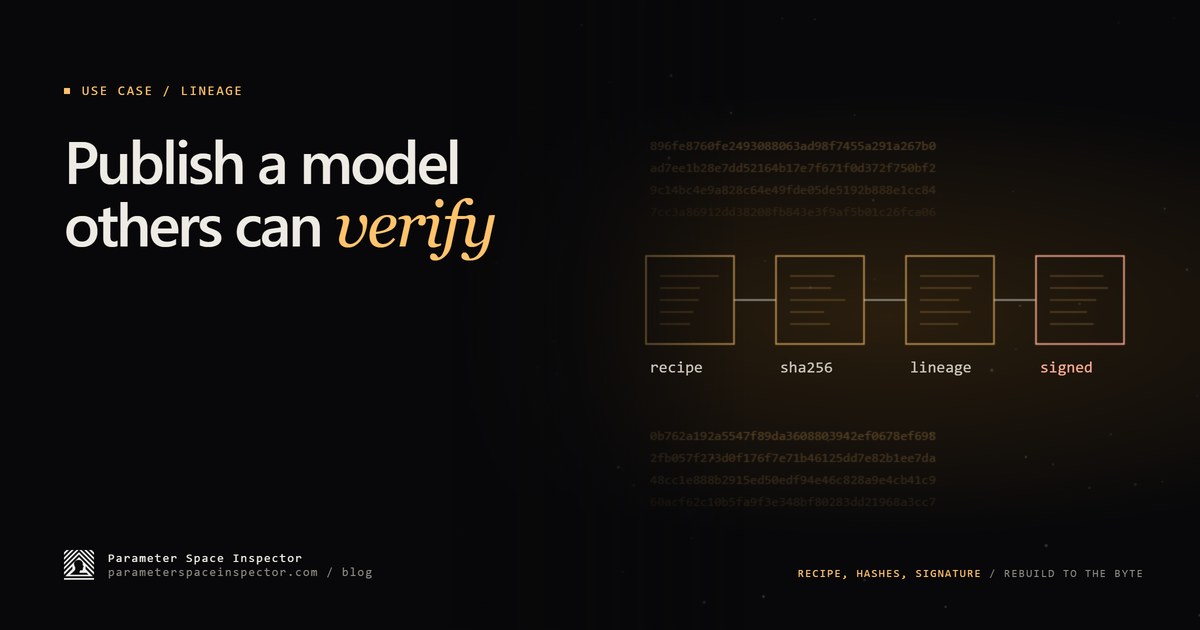 Walkthrough videoPublish a model others can verifybuilds a merge as a recipe pinned by hash and runs the verifier, which marks each claim proof, evidence or claim
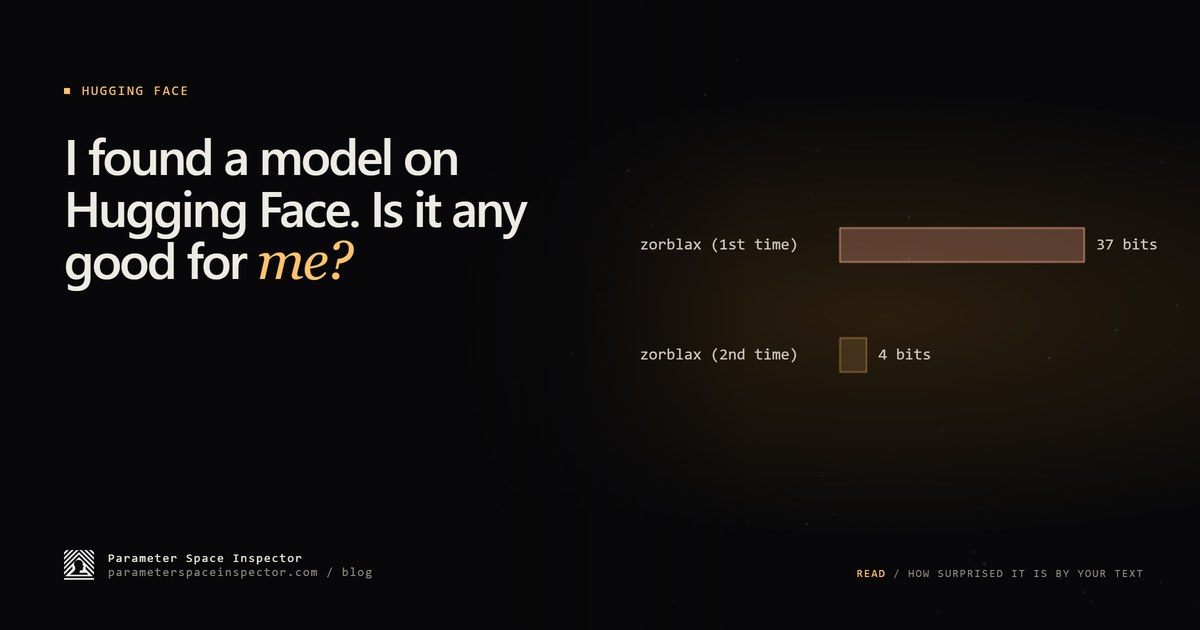 Walkthrough videoI found a model on Hugging Face. Is it any good for me?ran the distance screen to check "fine-tuned from": light fine-tunes sat 0.0004 to 0.04 from the base, a look-alike at 0.56
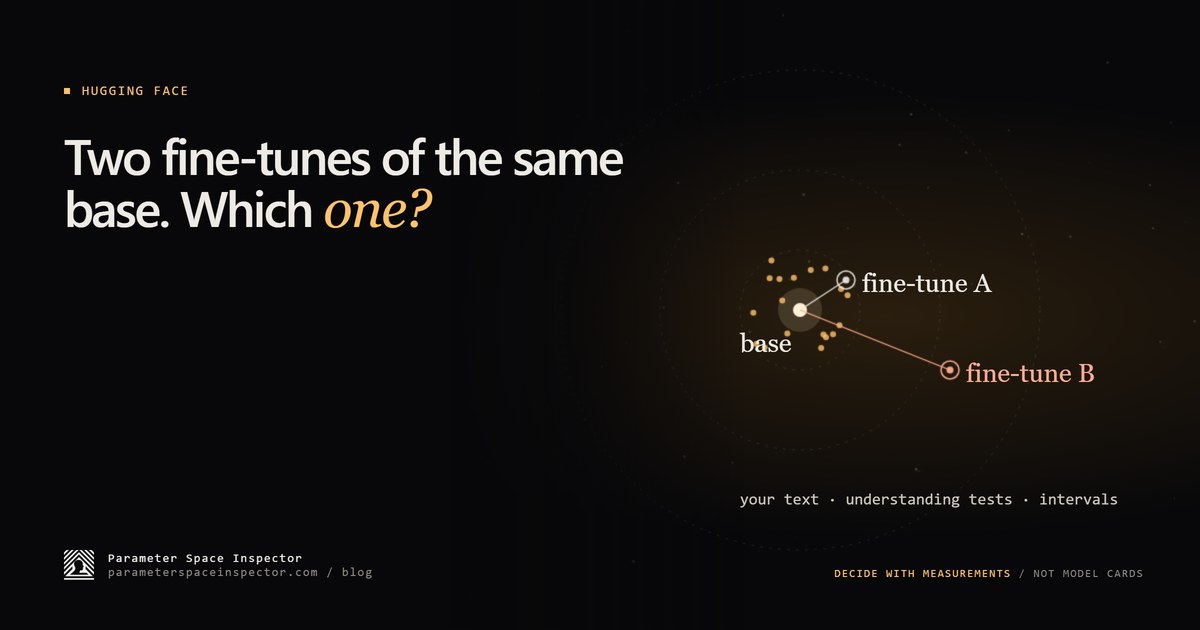 Walkthrough videoTwo fine-tunes of the same base. Which one?lists same-shape fine-tunes of a base and screens them by weight distance; light fine-tunes sit at 0.0004 to 0.04 from their base
Questions people ask
How is a recipe different from a mergekit config?
A mergekit config names models by repository address and the result depends on what is at that address today. A Commons recipe pins each parent by hash and states the expected output hash, so a third party can prove the build. See mergekit.
Do I need a GPU?
Not for the stories260K line. Larger seed lines need the memory of the models involved.
Where do shared recipes live?
On Hugging Face, tagged psi-recipe, for example the EmergenceMachines organisation. Import one by pasting its hf:// path into Commons.