
The question it answers: where did this model come from?
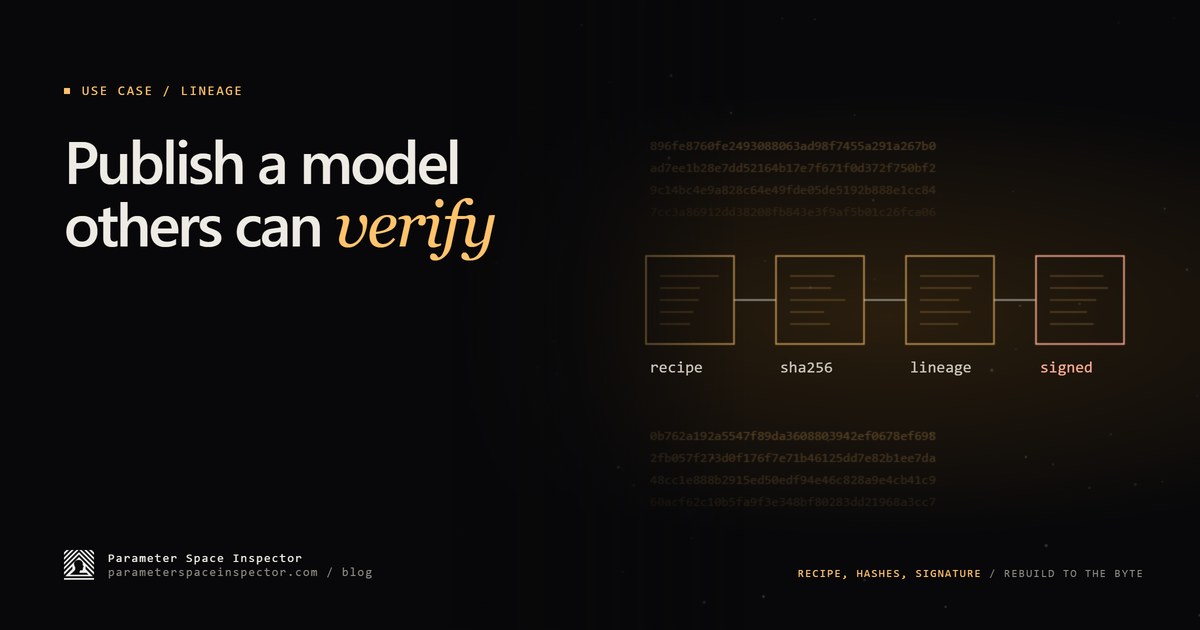
Every model the view grows carries a record: the parent it started from, the data it was trained on (by hash), the training settings, and the result. The record is a chain, so a model grown from a grown model carries both steps. If you choose a key, each step is signed; by default nothing is signed and nothing leaves your computer.
Why a family tree
A model's lineage is usually a claim in a model card. Here it is a record that a verifier can check, step by step, marking each claim as proof (hashes match and the signature holds), evidence (the record is consistent) or claim (stated only). The Commons view extends the same record across many people's branches.
What it needs
The seed line's first model, stories260K, has 260,000 numbers and trains on a CPU in seconds, so the view needs no GPU to start.
SEE IT USED
Case studies that use Seed & lineage
Each one is a published study you can repeat in the Inspector, then change to your own question.
Questions people ask
What is a seed?
A small model with a known starting point, public data and a public evaluation suite, from which branches are grown. The first seed line is Andrej Karpathy's stories260K.
Do I have to sign?
No. Signing is opt-in and uses keys you generate. Without a key the record still exists and can still be checked as evidence.
How is this different from a Hugging Face model card's base_model field?
That field is self-declared; anyone can write any base. A lineage record pins the parent and the data by hash and can carry a signature, so the claim can be checked rather than trusted. See Hugging Face Hub lineage.