
The question it answers: what is in this file?
A GGUF file starts with a header that describes everything about the model: the architecture, the number of layers and heads, the quantisation of every tensor, the tokenizer and its dictionary, the chat template, and any metadata the maker added. File reads that header and shows it. It never reads the weights, so a 100 GB file opens as fast as a 1 GB one.
What it is for
- Checking what you downloaded before you load it: the quantisation, the context length it was trained for, the licence field if the maker set one.
- Comparing two files of the same model at different quantisations.
- Finding the tokenizer and chat template a model expects, which decides how your prompts are turned into pieces.
What it needs
Nothing beyond the file. File does not start an engine.
SEE IT USED
Case studies that use File
Each one is a published study you can repeat in the Inspector, then change to your own question.
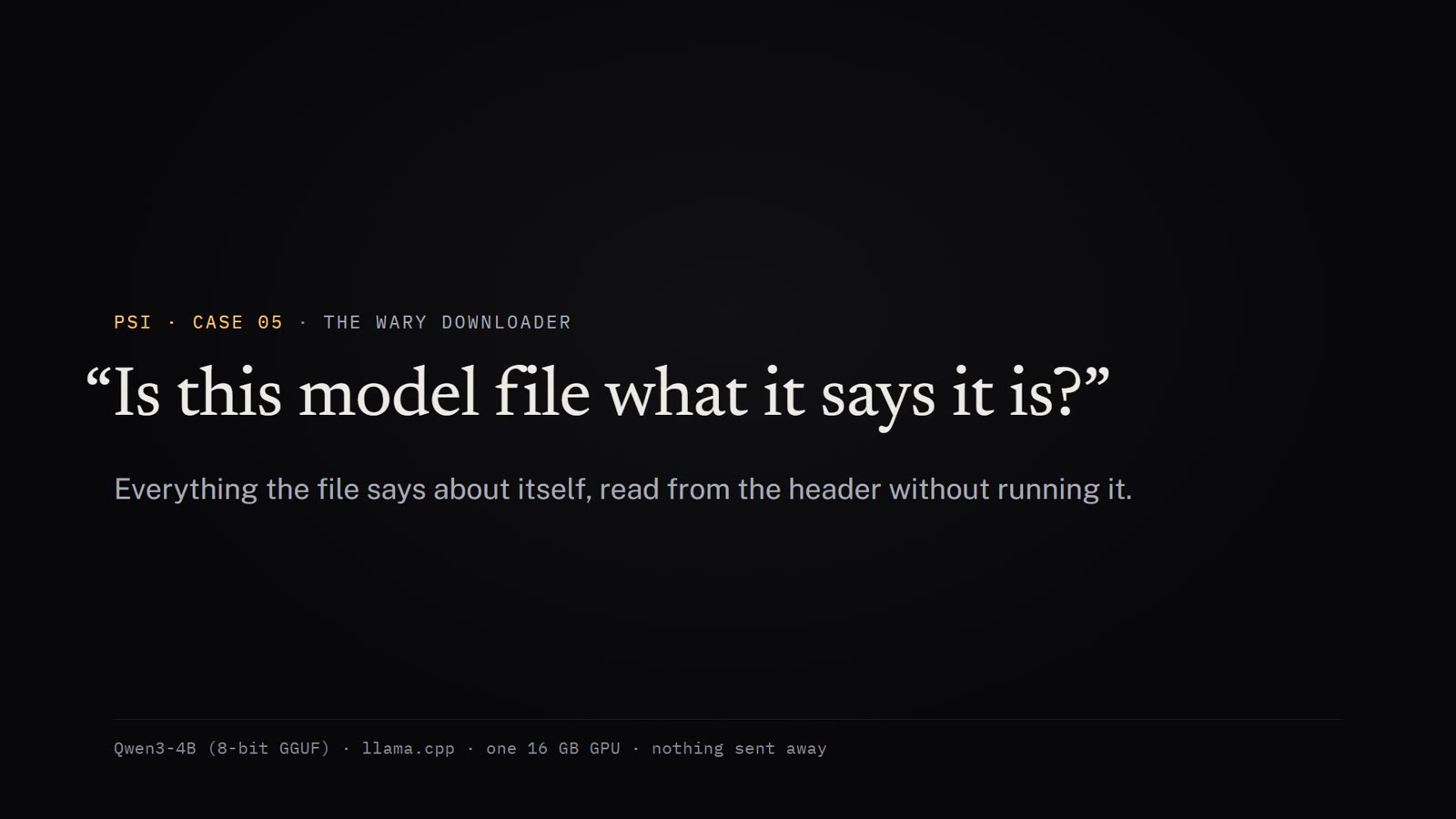 Walkthrough videoIs this model file what it says it is?read a Qwen3-4B file's header without running it: 4,022,468,096 parameters, 36 layers, 253 tensors at 8 bits, and the licence absent
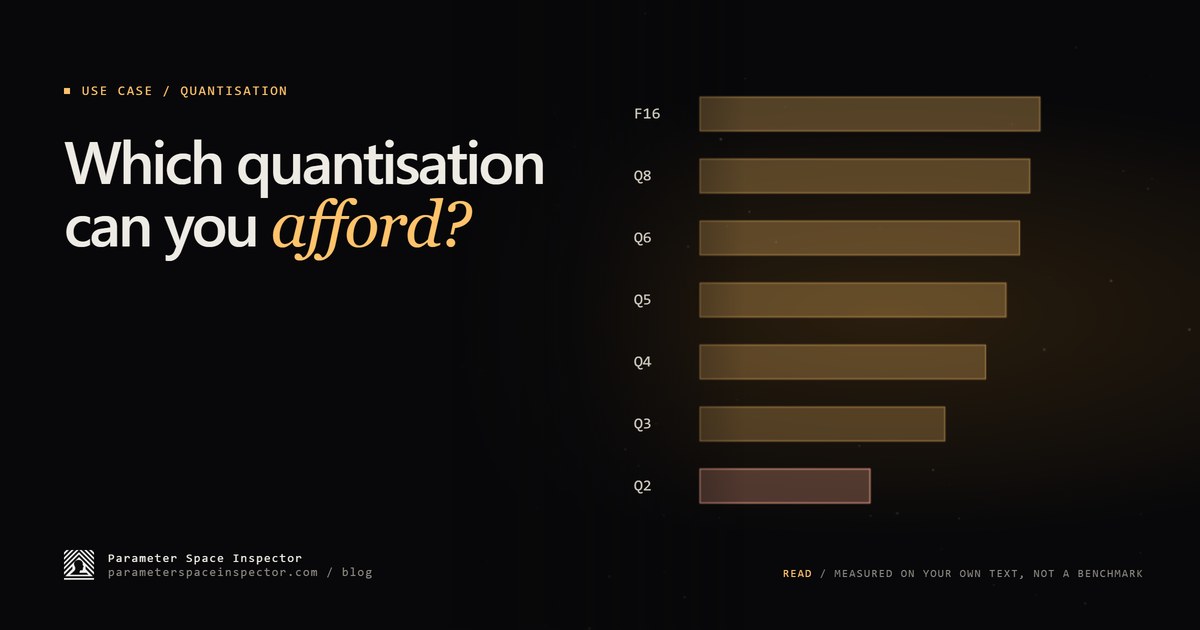 Walkthrough videoWhich quantisation can you afford?checked each quantised file's header (architecture, layers, vocabulary, storage types) so the two differ only in quantisation
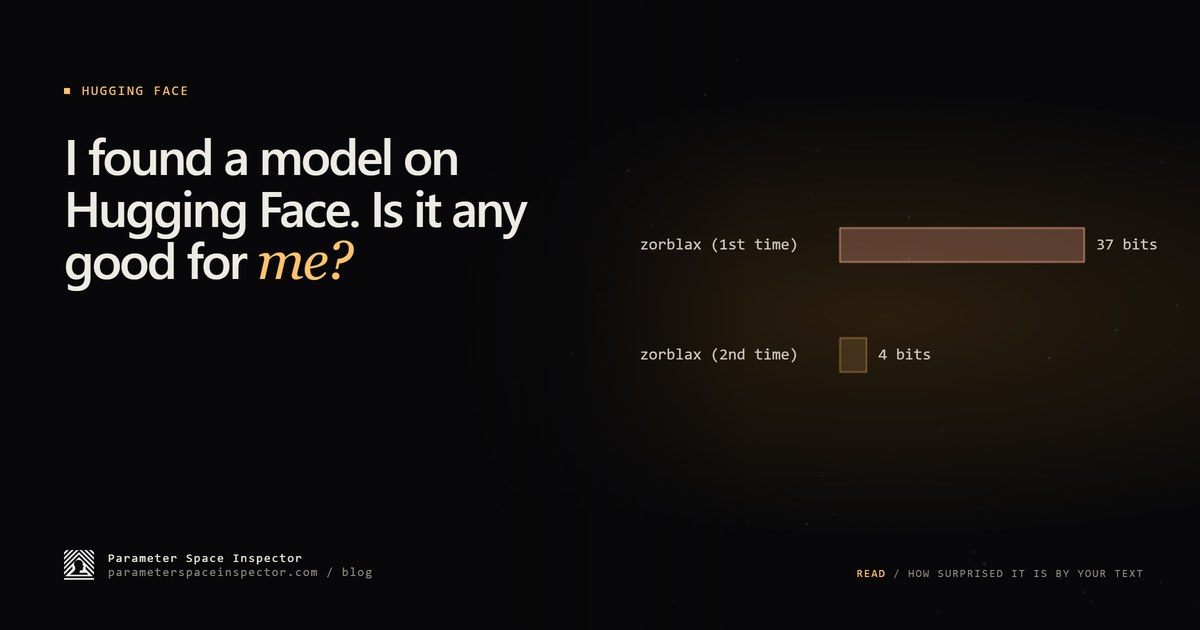 Walkthrough videoI found a model on Hugging Face. Is it any good for me?read the downloaded file's header against the card's claims; a file often does not carry its own licence
Questions people ask
Is it safe to open an unknown GGUF?
File reads only the header, with its own parser. Loading a model for answers hands the file to llama.cpp, which parses it natively, so open only files you trust in the other views.
Does File show the size of the model in parameters?
Yes, from the tensor shapes listed in the header, together with the bytes each tensor takes at its quantisation.
Can it read safetensors?
No. File is for GGUF. The inside views read unpacked Hugging Face-format folders through PyTorch instead.