
The question it answers: what does the model actually read?
Not letters, and not words. A language model reads tokens: pieces of text from a fixed dictionary that was built before training. The Tokens view shows those pieces for any text you type, with the boundaries where the model's view of your sentence differs from yours.
The same sentence in five languages
Type a sentence and the view shows how many pieces it costs in five languages. The same sentence costs more pieces in Hindi than in English, so the model sees some languages through a coarser surface, and every limit on context length is a tighter limit in those languages.
Where your words sit
The view also places your words in the model's embedding space, the first layer of numbers the model makes from each piece, so you can see which pieces the model starts out treating as neighbours.
What it needs
The llama.cpp engine: a GGUF file, llama.cpp and Node.js.
SEE IT USED
Case studies that use Tokens
Each one is a published study you can repeat in the Inspector, then change to your own question.
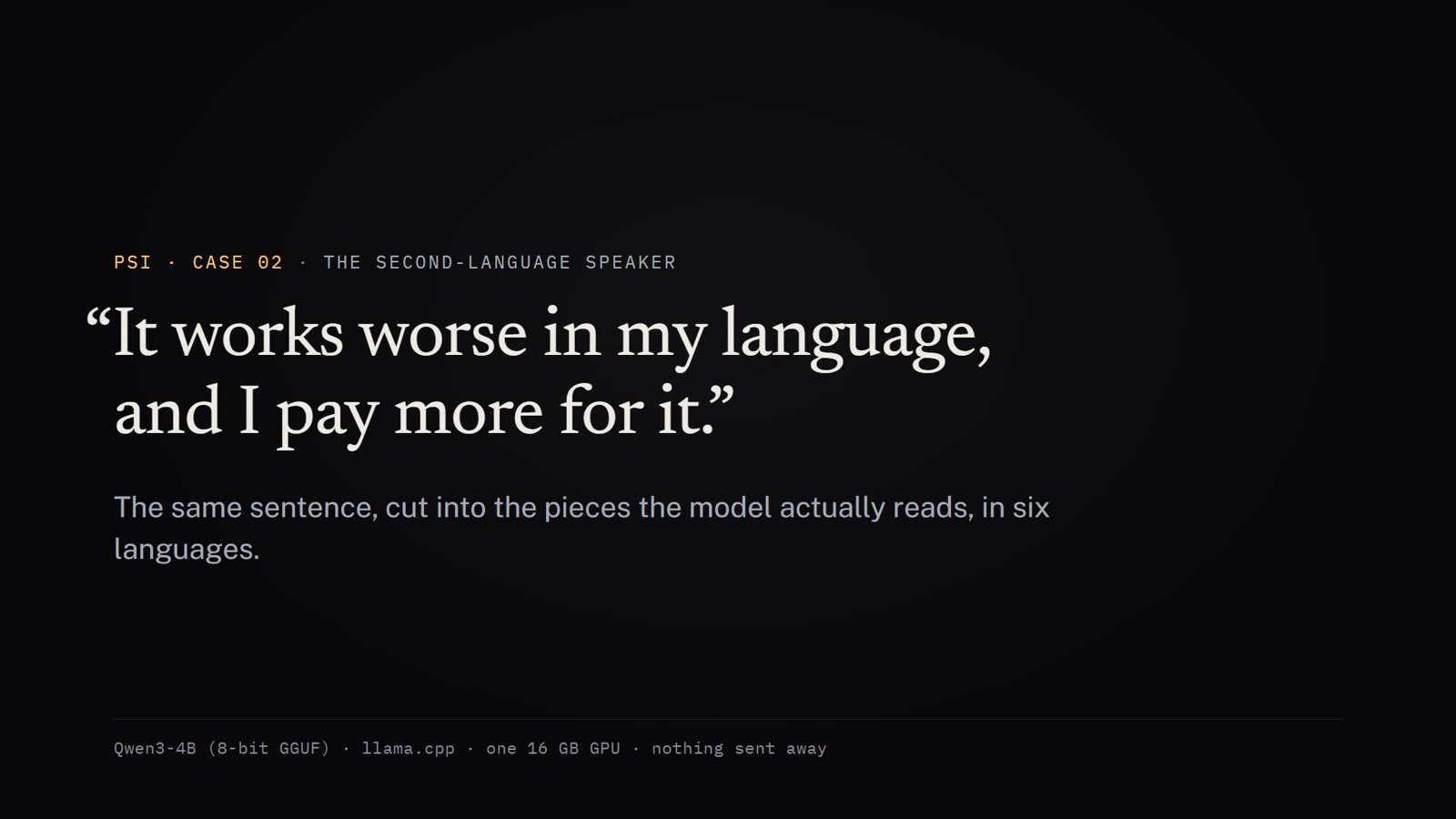 Walkthrough videoWhat does your language cost the model?cut one sentence in six languages: 9 pieces in English, 37 in Hindi, 66 in Malayalam, 7.3 times the English cost, 53 of them fragments of a character
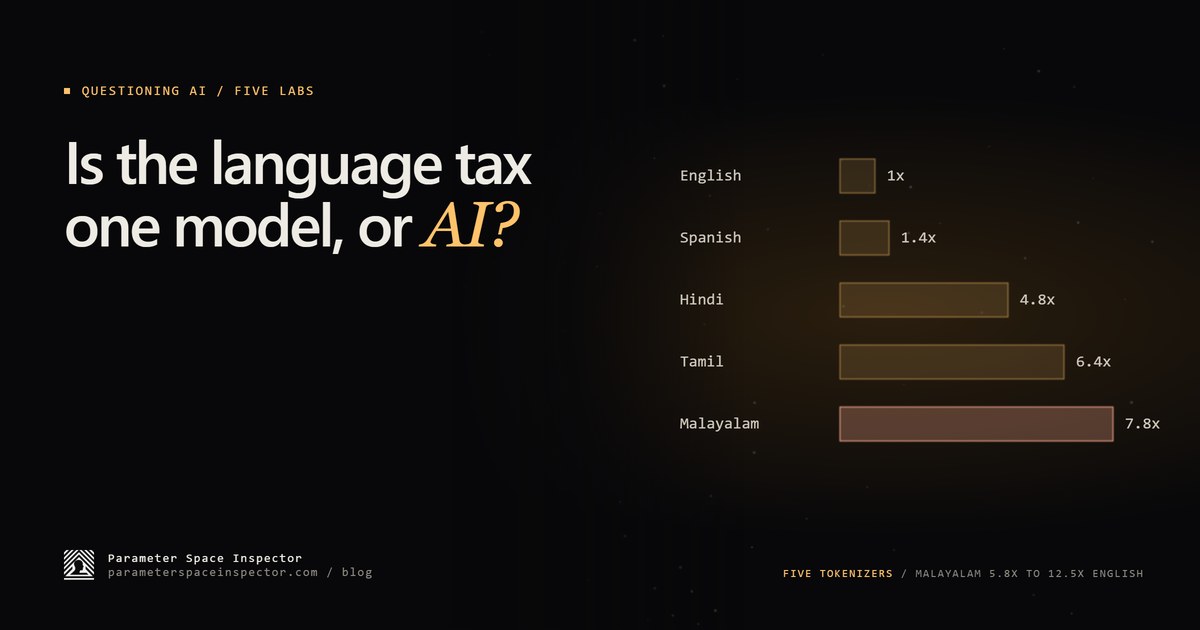 Walkthrough videoIs the language tax one model, or AI?counted the same paragraphs in 12 languages on five tokenizers: Malayalam cost 5.8 to 12.5 times the English pieces
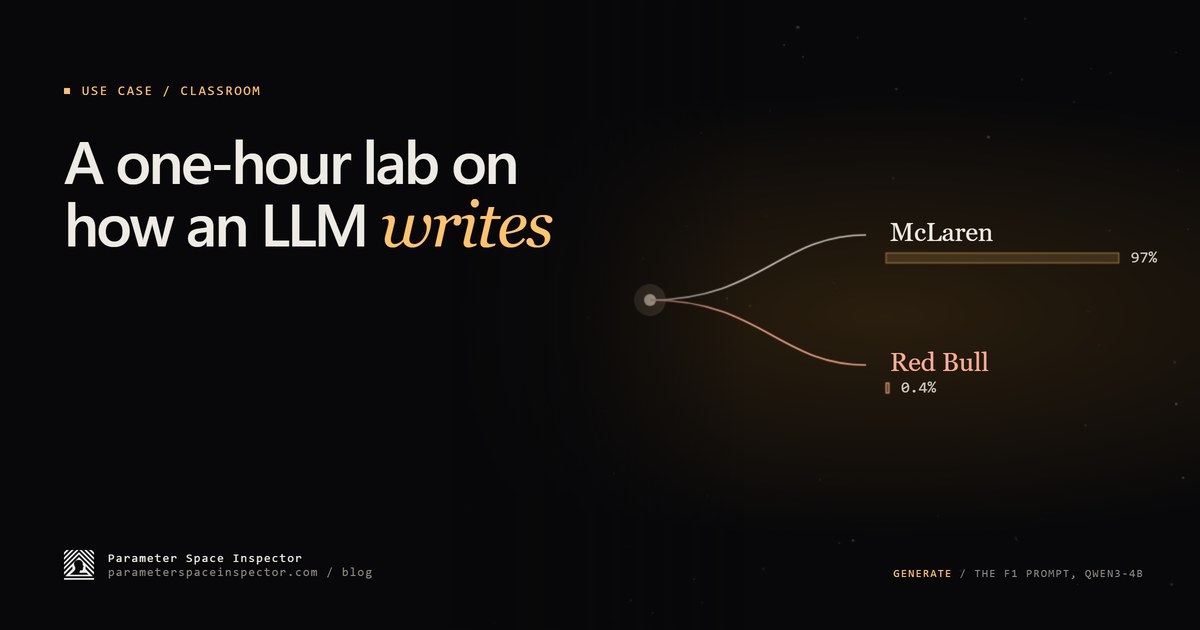 Walkthrough videoA one-hour lab on how an LLM writesstudents count the pieces one sentence costs in five languages; Hindi costs more than English
 Walkthrough videoWhat happens when you type a question?showed a 40-character sentence cut into 10 numbered pieces, with Lisbon as piece 80701
 Walkthrough videoMeasure it for your reportshowed a student's 41-character sentence becoming 10 pieces, with "chased" as piece 61820
Questions people ask
Why does a word split into several tokens?
The dictionary is built from frequent text fragments. Common English words are one piece; rare words, names, numbers and most non-English words are assembled from several.
Does the tokenizer differ between models?
Yes. Each model family ships its own dictionary inside the GGUF file, and the Tokens view reads the one in the model you loaded.
Does this explain why models count letters badly?
Partly. A model never sees the letters of a piece, only the piece, so questions about letters inside words are questions about something it does not read.