
The question it answers: does a framing change the answer, and does the model hold the framework's levels?
The Emergence Machine describes reality as fifteen levels, E0 to E14, from fields to planetary coordination. Compare framings asks the same question twice, with and without a framing that names the levels, and shows the answers side by side. A second part reads where each level sits inside the network: whether the levels are laid out layer by layer, and in what order a model learns the concepts that belong to them.
What it needs
The llama.cpp engine for the side-by-side answers; the inside engine for reading the levels in the network.
What it showed
Mostly, no. The levels are not laid out layer by layer inside a model: about two thirds of a sentence's level is already in its words, and only the relational levels, ecosystems and minds, needed depth. Models do not learn concepts in the order of the levels; they learn the concrete and frequent first. The instrument was built to test the idea and was allowed to disagree with it. The "no" made every later "yes" easier to believe.
The scorecard
- Supported: abilities arrive in steps, and the step can be placed; a concept is a slice held together by a word; early choices narrow later ones.
- Partly: the fight classes describe something real, but knowing and saying come apart; text alone grounds a concept like colour only modestly.
- Not supported: levels are not stacked by layer; learning order does not follow the levels; no sign that models act differently when told they are watched.
SEE IT USED
Case studies that use Compare framings
Each one is a published study you can repeat in the Inspector, then change to your own question.
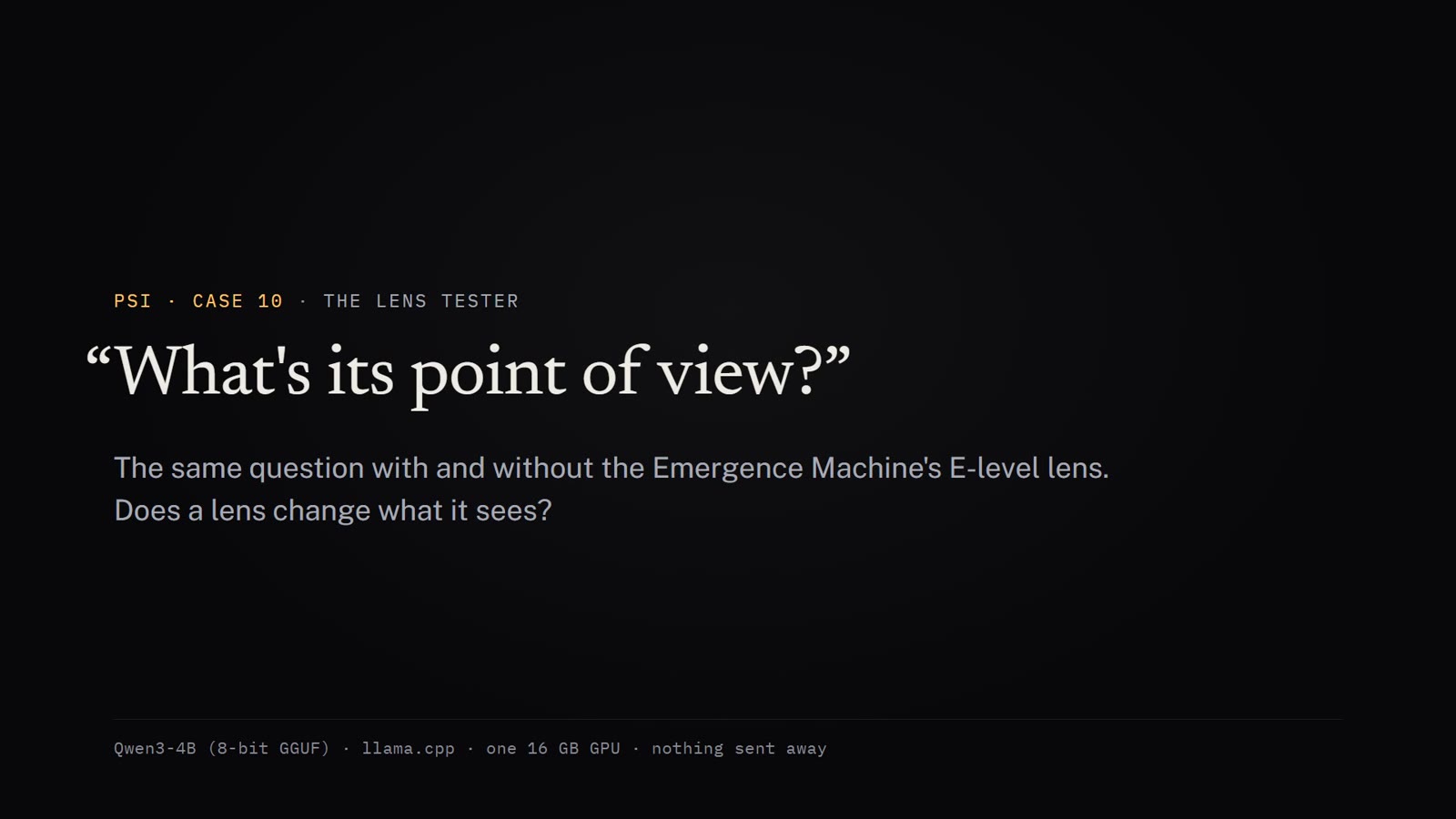 Walkthrough videoWhat is its point of view?asked why AI companies build data centres with and without the E-level lens: compute and demand unframed, levels E3 to E10 with the lens
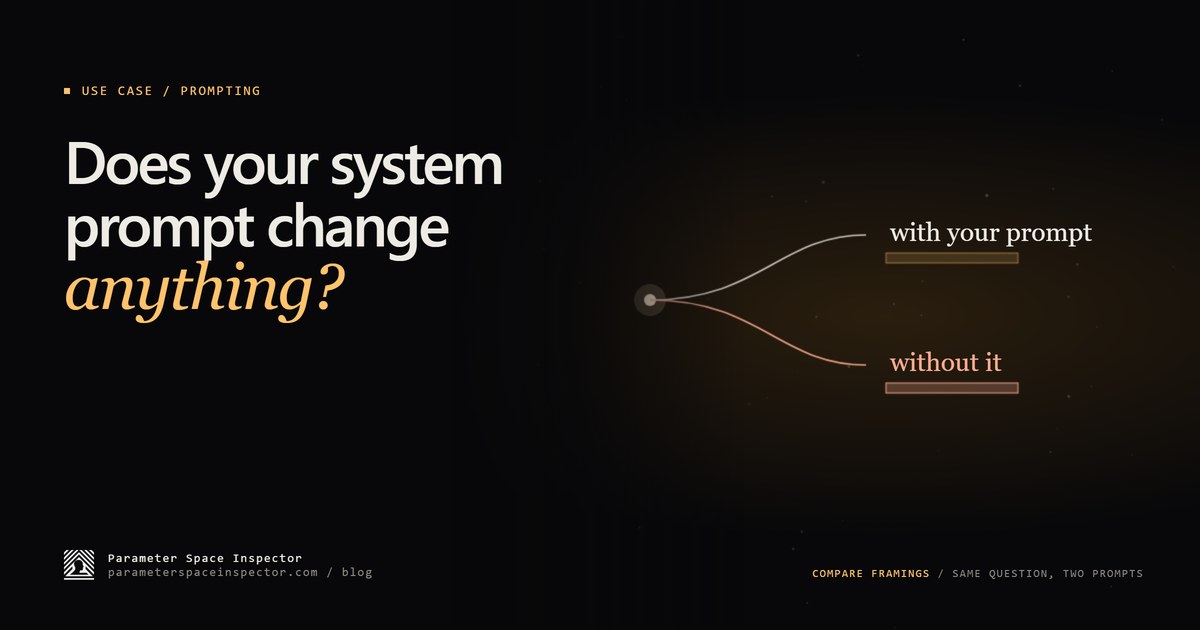 Walkthrough videoDoes your system prompt change anything?ran a question your users ask with and without your own framing side by side, to see whether it changed the forks where the top choice had 60 to 70%
 Walkthrough videoCan a one-line rule shield an AI?asks ten prompts with and without the rule side by side: three of ten changed their pick, not only their length
 Walkthrough videoDoes “answer only if certain” make an AI steadier?asked eight questions with and without the rule side by side: the rule changed one outcome, refusing a spider's eight legs
Questions people ask
Why build an instrument that can disagree with you?
Because a result you cannot lose is not a result. The negatives are kept in the research log beside the positives.
Can I use my own framing?
Yes. The framing is a text you can edit, so the view works for any lens you want to test.
Are these results about all models?
They were measured on Qwen3-4B, a family of smaller models, and larger models tested only from the outside. Probes find correlations, not causes.